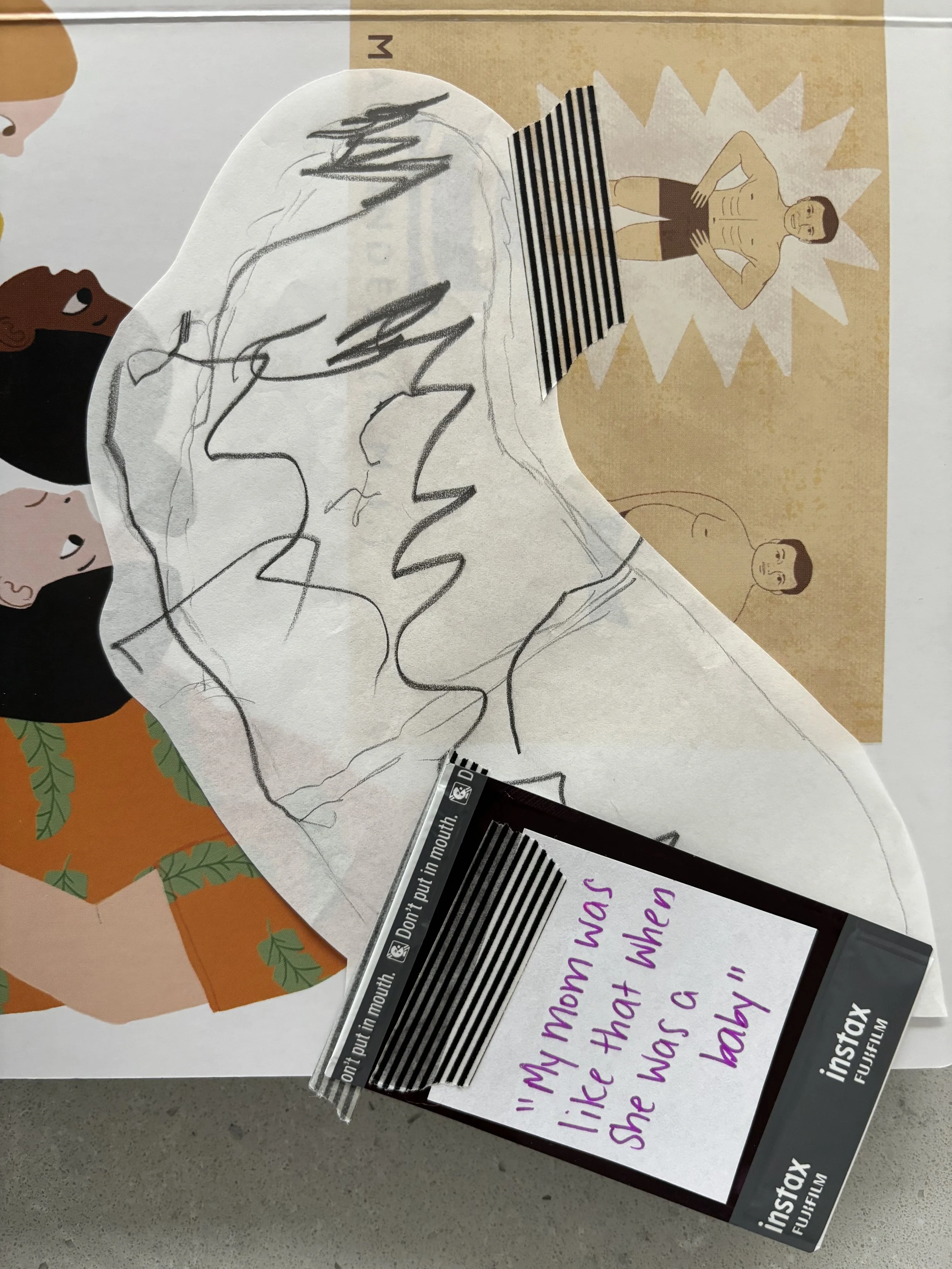
From the critical literature on body pedagogies and biopedagogies, biomorality became a key concern and inheritance that we worked to understand, question, and interrupt with children.
Biomorality owes to body logics that “conflate appearance, health and morality” (Rich et al, 2020, p. 134). Biomorality stems from the “neoliberal public health imperative that we are all responsible for our own health and that we must demonstrate a certain level of fortitude, strength of character, or “willpower” that allows us to deny certain pleasures” (Ward, 2016, p. 233). Particular to childhood and education, we learn from Evans and Rich’s (2011) contention that “how school-based body pedagogies mediate, categorise and select on the basis of health discourse which has as its referent a normative vision of the ideal body (its shape, acceptable physical activity and healthy eating) should, therefore, become more than just our passing concern” (p. 375).
That biomorality professes to already know what counts (and what does not count) as morality in the ever-changing diverse worlds we share with children is pedagogically untenable for us. While we hold that body logics and relations are tangled with questions of living well together, we refuse to assume that we already know how situated collisions between bodies and ethics happen, implicate us in, and mean for creating more just futures.
We are also troubled by how biomorality breeds body logics that directly prescribe how body functions and body appearances inform moral subjecthood, citizenship, and identity. Creating exclusions from subjectivity, and more consequentially from the category of the human (Wynter, 2003) and child (Knight, 2024), based on Eurocentric metrics of body conformity and body normativity is an incredibly violent logic – and one we refuse to perpetuate with children. Additionally, Jette et al. (2016) describe how, through biomorality, “the opportunity thus presents itself to attribute responsibility and blame to those with large bodies who, it is uncritically assumed, ostensibly lack the willpower to engage in appropriate lifestyle behaviors and slim down, so as to become healthy” (p. 1114). This deployment of biopower to directly blame and diagnose the diverse, complex work of living in a body validates body logics of management, mitigation, responsibility, control, regulation, and discipline. When we speculate about the body logics we hope will contribute to a more affirmative body relations with children, we refuse this status-quo emphasis on surveillance and domination.
The comparative and competitive dynamic created by locating biomorality and the ‘good’ citizen within a child’s achievement of a normative body is, in our view, a tool of oppression. As Rail and Jette (2015) note, biomorality “incites the contra-juxtaposition of the biocitizen to the unfit, unwell, and unproductive bio-Other” (p. 328). Requiring that children truncate their bodied differences in the name of obtaining moral supremacy over others – especially when the biopolitical norm that marks success is defined by whiteness, power, neoliberalism, and capitalism – directly counters our commitment to creating more-just worlds with children. Further, this we argue that this simplistic recourse to othering strips the liveliness of bodied difference from children’s experiences of getting to know bodies, labelling difference as both a deviant body and a failed subject.
Context, Concerns, and Inheritances
Body Pedagogies and Biopedagogies
We understand body pedagogies as the “structures of meaning defining what the body is and ought to be” (Evans & Rich, 2011, p. 376). This includes the collection of practices, knowledges, and structures that inform how we – as individuals, publics, and citizens – ascribe meaning and value to bodies and are assigned meaning and value based on our bodies. For Harwood (2009), biopedagogy “is the art and practice of teaching of ‘life’, of bios in this ‘biopower mode’” (p. 21), where biopower is theorized, following Foucault, as the relations of power and their attendant technologies (ex. policy, assessments, media) that govern bodies. How bodies are monitored, regulated, controlled, and disciplined is informed by the state-sanctioned structural knowledges that dictate the ‘ideal’ body and, concurrently, the ideal subject (Rich, 2011). In the Canadian context, this ideal body and subject is articulated by colonial heteropatriarchal norms and neoliberal constructions of the self-responsible individual subject (Elliott, 2016; Petherick, 2023). This means that whiteness (Douglas & Halas, 2011) and Eurocentric norms (Dowling & Flintoff, 2018) underpin what dominant discourses figure as the valued body and create the parameters that exclude bodies that do not perform or conform to these norms.
Biopedagogies enact layered regulatory activities, where “biopedagogies have a central function in contemporary biopower via their contribution to the task of regularising aleatory populations, and in the disciplining of the individual” (Harwood, 2009, p. 26). Biopedagogies and body pedagogies purposefully blur the structural and individual, creating traffic whereby bodies are understood and valued through their compliance with neoliberal biomorality and biocitizenship while, simultaneously, obscuring how neoliberal capitalism commodifies, harms, and makes these purportedly desired body relations that an individual should achieve increasingly impossible and irrelevant. For example, ”the emphasis on self-governance and corporeal control promotes the shaping of lifestyle practices as though individuals can prevent and manage illness, disease, and poor quality of life” (Petherick, 2015, p. 363), while simultaneously “the optimized biocitizen is tied to a neoliberal bioindustrial complex inculcated into a regime of truth that ultimately hijacks the subject in the guise of freeing it” (Rail & Jette, 2015, p. 332).
Accordingly, the character and function of biopower is biopolitical; bio and body pedagogies are iteratively invested in and sustained by the political conditions that support desired bodies to thrive (Petherick, 2023). When valued or ‘good’ bodies (and subjects) gain power, they then reproduce the political conditions that assign them this value, power, and hierarchical subject position (Wrench, 2019). That biopower, biopolitics, and biopedagogies are tools of oppression is clear, as they submit bodied difference to ongoing racialization, discrimination, marginalization, and domination.